Anthropic Claude
Integrations
Safeguard your AWS S3 data from exposure and cyber threats.



The Challenge
Amazon S3 offers robust and scalable cloud environments for businesses to store and manage data. However, misconfigurations in Identity and Access Management (IAM) controls, weak encryption, and the risk of compromised credentials are growing concerns.
Solution
Concentric AI detects threats like unauthorized access attempts and using stolen credentials, alerting security teams to take real-time action.
Misconfigured Identity and Access Management (IAM)
Misconfigured IAM policies can result in overly broad access, leaving sensitive cloud data vulnerable. Concentric AI helps identify and correct IAM misconfigurations, ensuring that only authorized users can access critical resources.
Weak encryption
Cloud platforms are often exposed to risks when encryption is not consistently applied to data at rest and in transit. Concentric AI ensures encryption protocols are enforced across your cloud environment.
Amazon S3 can store enormous volumes of sensitive business information, including customer records, financial data, intellectual property, employee information, application data, and backups. Common security risks include misconfigured IAM policies, overly permissive bucket or object access, compromised credentials, unintended external exposure, sensitive data sprawl, and unauthorized data access or downloads.
S3's scale can make it difficult to maintain an accurate understanding of what sensitive data exists across thousands of objects and who can access it. Security teams need to understand what sensitive information is stored, where it resides, which identities can access it, and whether that access is appropriate.
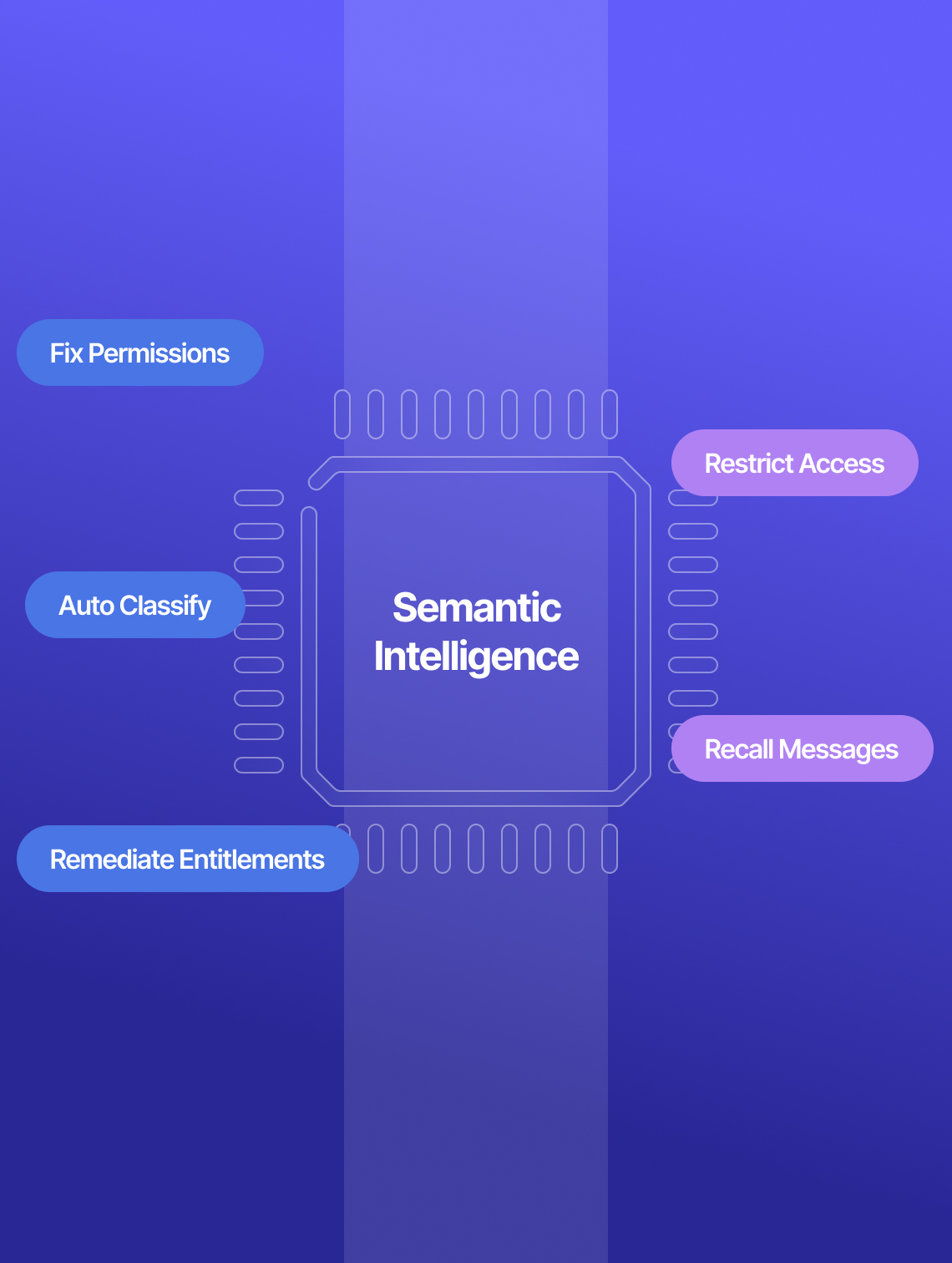
Concentric AI continuously discovers and understands sensitive data across S3 buckets and analyzes it alongside users, roles, permissions, and access relationships. This helps security teams identify high-risk exposure, prioritize excessive access, and protect sensitive information across Amazon S3.
Misconfigured IAM policies can grant users, roles, applications, or services broader access to S3 data than they need. Overly permissive policies, excessive privileges, unintended cross-account access, and stale permissions can expose sensitive objects to identities that do not have a legitimate business need to access them.
The challenge is that IAM policies describe what an identity is allowed to access, but they don't necessarily reveal the sensitivity of the underlying data. A permission that appears reasonable in isolation can create significant risk when it provides access to sensitive customer, financial, or confidential information.
Concentric AI connects sensitive data discovery with S3 identity and access analysis to identify excessive or inappropriate access. Security teams can see what sensitive data an identity can reach, how access is granted, and where permissions create meaningful exposure, helping them prioritize remediation and enforce least-privilege access.
To detect compromised credentials in S3, organizations should monitor access activity and identify behavior that deviates from an identity's normal patterns. Potential warning signs include unusual access to sensitive objects, large-scale downloads, access from unexpected locations or applications, activity outside normal responsibilities, and sudden access to data an identity has not previously accessed.
Detection becomes more useful when security teams can understand the sensitivity of the data involved. An unusual access event involving a public document may require a different response than the same behavior involving regulated or confidential information.
Concentric AI combines continuous activity monitoring with sensitive data context to show who accessed the data, what data was involved, what action was taken, and why the activity may be risky. This helps security teams investigate potential credential compromise, prioritize incidents based on data sensitivity, and take remediation actions to reduce exposure.
To find and classify sensitive data across S3 buckets, organizations need to discover objects at scale and understand the information they contain. This can be challenging in S3 environments because organizations may have thousands or millions of objects containing structured and unstructured information, often with inconsistent naming conventions or metadata.
Concentric AI uses patented language models to understand the meaning and context of data stored across S3 rather than relying solely on keywords, regular expressions, or predefined patterns. It continuously discovers and classifies sensitive information, identifies where it resides, and analyzes who or what can access it.
This enables security teams to understand which S3 objects contain sensitive data, where that data resides, who can access it, and which exposures require remediation—without relying solely on manual review or file names and metadata.
The compliance requirements that apply to data stored in Amazon S3 depend on your industry, location, and the types of information your organization collects and processes. Common regulations and frameworks include GDPR, HIPAA, PCI DSS, CCPA/CPRA, SOC 2, and NIST, along with industry-specific and regional data protection requirements.
AWS and Amazon S3 provide encryption, access controls, logging, monitoring, data protection, and governance capabilities that can help organizations meet compliance requirements. However, compliance requires more than securing the cloud storage service. Organizations also need to understand what sensitive data is stored in S3, where it resides, who can access it, how it is being used, and whether it remains appropriately protected.
Concentric AI complements S3 security and governance by continuously discovering and understanding sensitive data, analyzing access and exposure risks, and identifying potential compliance gaps. This helps security and compliance teams reduce unnecessary data exposure, enforce appropriate access controls, and maintain visibility into sensitive information across S3 and the broader enterprise.