Anthropic Claude
Integrations
Protect your Azure Files data from exposure, leakage and misconfiguration.


The Challenge
Azure Files offers robust and scalable cloud environments for businesses to store and manage data. However, misconfigurations in Identity and Access Management (IAM) controls, weak encryption, and the risk of compromised credentials are growing concerns.
Solution
Concentric AI detects threats like unauthorized access attempts and using stolen credentials, alerting security teams to take real-time action.
Misconfigured Identity and Access Management (IAM)
Misconfigured IAM policies can result in overly broad access, leaving sensitive cloud data vulnerable. Concentric AI helps identify and correct IAM misconfigurations, ensuring that only authorized users can access critical resources.
Weak encryption
Cloud platforms are often exposed to risks when encryption is not consistently applied to data at rest and in transit. Concentric AI ensures encryption protocols are enforced across your cloud environment.
Azure Files can store and share sensitive business information, including customer records, financial data, employee information, intellectual property, and operational files. Common data security risks include excessive permissions, misconfigured access controls, compromised credentials, unauthorized access, external exposure, and sensitive files being accessible to more users than necessary.
Because Azure Files can be accessed by users, applications, and workloads across cloud and hybrid environments, understanding data exposure can become increasingly complex. Security teams need to know what sensitive information is stored, who can access it, how it is being accessed, and whether that access is appropriate.
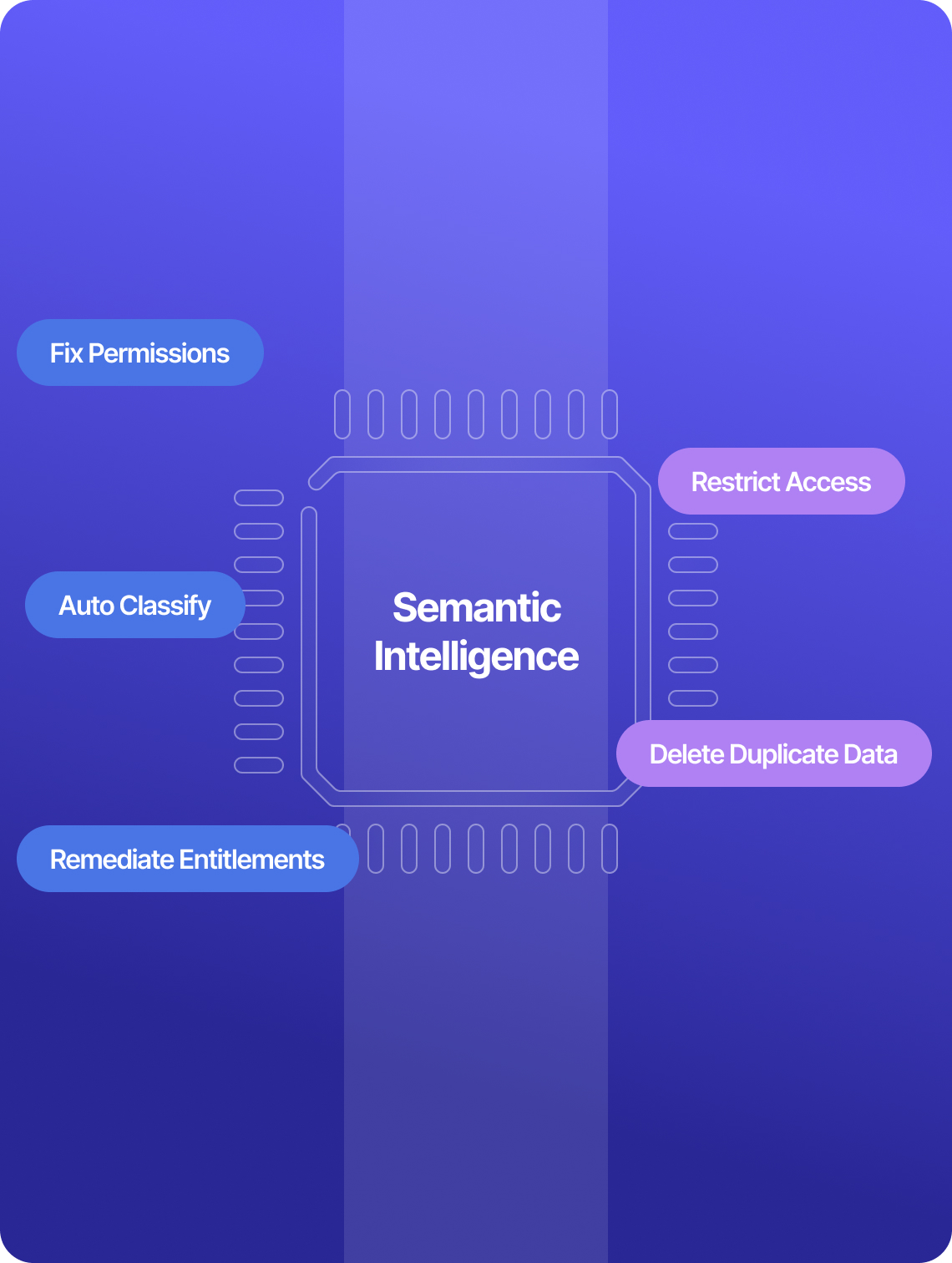
Concentric AI continuously discovers and understands sensitive data in Azure Files and analyzes it alongside users, groups, permissions, and access activity. This helps security teams identify high-risk exposure, prioritize excessive access, and protect sensitive information across Azure file shares.
Azure provides extensive native security capabilities for Azure Files, including encryption, identity-based access controls, authentication, networking controls, auditing, and monitoring. However, these controls alone may not provide the data-level visibility and context organizations need to fully protect sensitive information.
Effective Azure Files security requires understanding not just who has access to a file share, but what sensitive data it contains, who can access individual files, how that data is being used, and whether the access is appropriate.
Concentric AI complements Azure's native security by continuously discovering and understanding sensitive data in Azure Files and analyzing it alongside identities, permissions, and exposure. This helps security teams identify excessive or inappropriate access and prioritize remediation based on the sensitivity of the data involved.
To find and classify sensitive data in Azure Files, organizations need to discover files across their Azure file shares and understand the information they contain. Traditional classification approaches often rely on keywords, regular expressions, or predefined patterns, which can make it difficult to accurately identify sensitive information across large volumes of unstructured files.
Concentric AI uses patented language models to understand the meaning and context of unstructured data stored in Azure Files. It continuously discovers and classifies sensitive information, identifies the types of data present, and analyzes who has access to it.
This enables security teams to understand where sensitive data resides, what it contains, who can access it, and which files require additional protection or remediation without relying solely on manual classification or pattern-based detection.
To detect and respond to unauthorized access in Azure Files, organizations should continuously monitor file activity and identify unusual access patterns, particularly involving sensitive information. Potential indicators include unexpected access to sensitive files, unusual download activity, access from unfamiliar identities, or users accessing data outside their normal responsibilities.
Concentric AI combines sensitive data discovery with continuous activity monitoring to provide context around data interactions. Security teams can see who accessed the data, what data was involved, what action was taken, and why the activity may represent a risk.
When suspicious activity is identified, teams can investigate the event and take appropriate remediation actions, such as revoking access or addressing excessive permissions. This data-centric approach helps organizations respond to potential threats quickly while focusing attention on activity involving their most sensitive information.
The compliance requirements that apply to data stored in Azure Files depend on your industry, location, and the types of information your organization collects and processes. Common regulations and frameworks include GDPR, HIPAA, PCI DSS, CCPA/CPRA, SOC 2, and NIST, along with industry-specific and regional data protection requirements.
Azure provides encryption, access controls, auditing, monitoring, data governance, and other security capabilities that can help organizations meet compliance requirements. However, compliance requires more than securing the cloud storage service. Organizations also need to understand what sensitive data is stored in Azure Files, who can access it, how it is being used, and whether it remains appropriately protected.
Concentric AI complements Azure Files security and governance by continuously discovering and understanding sensitive data, analyzing access and exposure risks, and identifying potential compliance gaps. This helps security and compliance teams reduce unnecessary data exposure, enforce appropriate access controls, and maintain visibility into sensitive information across Azure Files and the broader enterprise.