Anthropic Claude
Integrations
Protect your database from exposure, attacks, and misconfiguration.


The Challenge
Databases like SQL Server are critical for managing enterprise data, but they face significant security risks. Databases are vulnerable to numerous threats like SQL injection attack and can leave sensitive data exposed.
Solution
Concentric AI detects risks such as unauthorized access attempts and misconfigured permissions, alerting security teams to take real-time action.
SQL injection
SQL injection attacks can exploit vulnerabilities in query logic to access sensitive data. Concentric AI identifies these attack patterns early.
Weak access controls
Improper access controls leave sensitive database information vulnerable. Concentric AI audits and remediates access control gaps, ensuring only authorized personnel can access critical data.
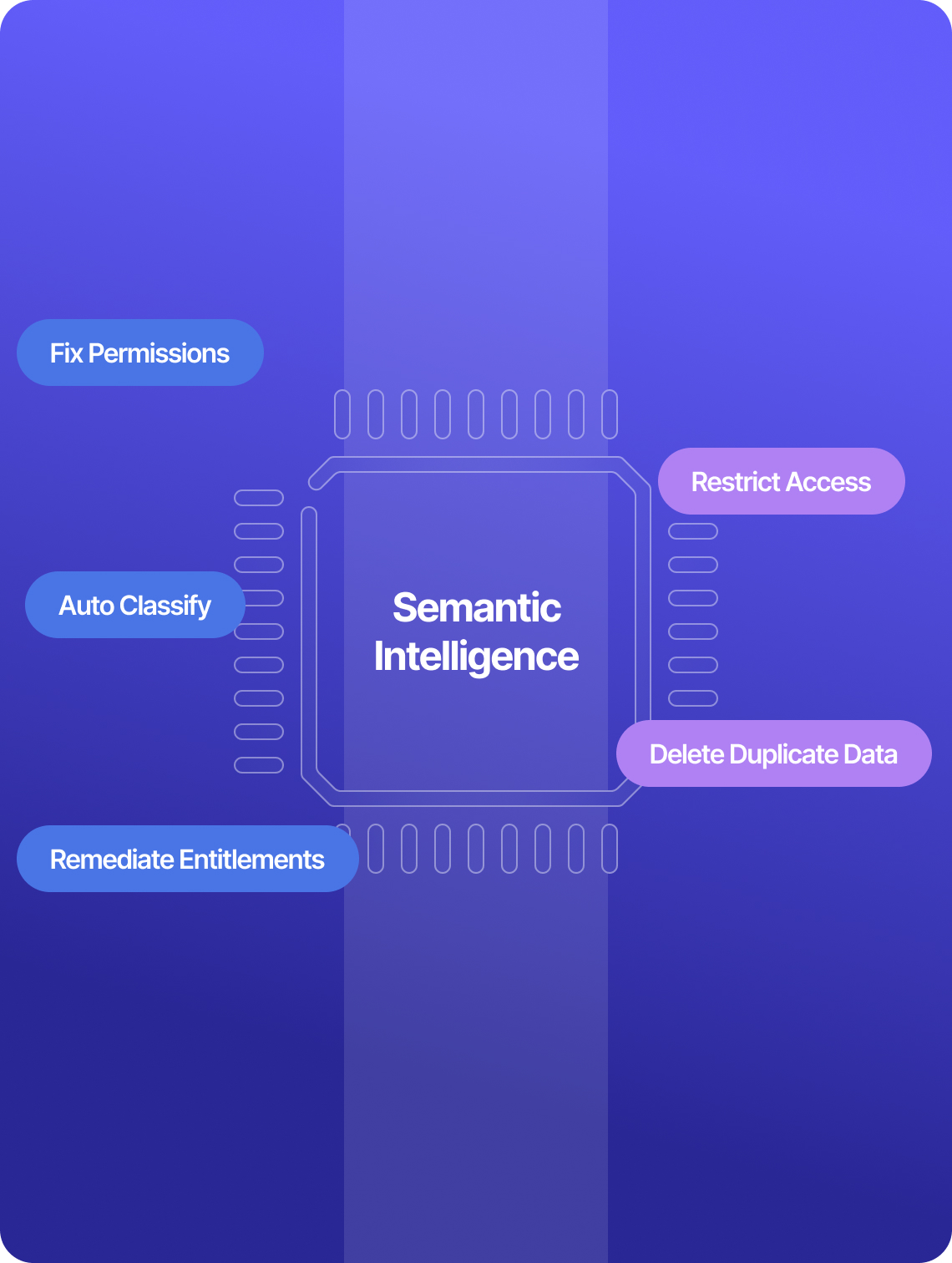
Microsoft SQL Server often stores highly sensitive business data, including customer information, financial records, employee data, credentials, and intellectual property. Common data security risks include excessive privileges, weak or misconfigured access controls, SQL injection, compromised credentials, unencrypted sensitive data, and unauthorized data access or extraction.
The challenge is understanding not just who can connect to SQL Server, but what sensitive data they can access, how that access is granted, and whether it is appropriate for their role and business requirements. As databases grow and users, applications, and permissions change, excessive access can become difficult to identify and manage.
Concentric AI continuously discovers and understands sensitive data in SQL Server and analyzes it alongside users, applications, permissions, and access. This helps security teams identify high-risk data exposure, prioritize excessive access, and protect sensitive information across their SQL Server environments.
SQL injection attacks exploit vulnerabilities in applications that construct database queries from untrusted input, potentially allowing an attacker to manipulate SQL statements and access, modify, or delete data they should not be able to reach. In SQL Server environments, a successful SQL injection attack can expose customer records, financial information, credentials, intellectual property, and other sensitive data.
Preventing SQL injection requires secure application development practices, parameterized queries, input validation, appropriate database permissions, and monitoring for suspicious activity. Organizations should also limit the potential impact of an attack by ensuring applications and users have only the database access they actually need.
Concentric AI adds a data-centric layer by identifying which sensitive information is stored in SQL Server and connecting data sensitivity with access and exposure. This helps security teams understand what data could be at risk if an account or application is compromised and prioritize remediation based on the sensitivity of the underlying data.
To fix weak access controls in SQL Server, organizations should review server and database roles, user permissions, application accounts, service accounts, and other access paths. Security teams should identify excessive privileges, remove unnecessary permissions, disable stale accounts, and enforce least-privilege access based on actual business requirements.
However, reviewing permissions alone does not show which access creates the greatest risk. Security teams need to understand what sensitive data each user or application can access and whether that access is appropriate.
Concentric AI analyzes sensitive SQL Server data alongside users, applications, roles, and permissions to identify excessive or inappropriate access. This data-centric approach helps security teams prioritize high-risk exposures and support remediation to reduce unnecessary access to sensitive database information.
Yes. AI can help classify and protect sensitive data in SQL Server by identifying sensitive information and understanding its context at scale. This can reduce the manual effort required to review large databases and help organizations apply appropriate security and governance controls.
Concentric AI uses patented language models to understand the meaning and context of data in SQL Server rather than relying solely on keywords, patterns, or predefined rules. It continuously discovers and classifies sensitive information, analyzes who and what can access it, and identifies data exposure risks that require additional protection.
By combining AI-powered data understanding with access and risk analysis, Concentric AI helps security teams maintain an up-to-date view of sensitive data in SQL Server and prioritize protection and remediation based on actual data risk.
The compliance requirements that apply to data stored in SQL Server depend on your industry, location, and the types of information your organization collects and processes. Common regulations and frameworks include GDPR, HIPAA, PCI DSS, CCPA/CPRA, SOC 2, and NIST, along with industry-specific and regional data protection requirements.
SQL Server provides encryption, access controls, auditing, monitoring, data classification, and other security capabilities that can help organizations meet compliance requirements. However, compliance requires more than securing the database. Organizations also need to understand what sensitive data is stored in SQL Server, who or what can access it, how it is being used, and whether it remains appropriately protected.
Concentric AI complements SQL Server security and governance by continuously discovering and understanding sensitive data, analyzing access and exposure risks, and identifying potential compliance gaps. This helps security and compliance teams reduce unnecessary data exposure, enforce appropriate access controls, and maintain visibility into sensitive information across SQL Server and the broader enterprise.