Anthropic Claude
Integrations
Safeguard your SAP Hana data from exposure and cyber threats.



The Challenge
SAP Hana offers robust and scalable cloud environments for businesses to store and manage data. However, misconfigurations in Identity and Access Management (IAM) controls, weak encryption, and the risk of compromised credentials are growing concerns.
Solution
Concentric AI detects threats like unauthorized access attempts and using stolen credentials, alerting security teams to take real-time action.
Misconfigured Identity and Access Management (IAM)
Misconfigured IAM policies can result in overly broad access, leaving sensitive cloud data vulnerable. Concentric AI helps identify and correct IAM misconfigurations, ensuring that only authorized users can access critical resources.
Weak encryption
Cloud platforms are often exposed to risks when encryption is not consistently applied to data at rest and in transit. Concentric AI ensures encryption protocols are enforced across your cloud environment.
SAP HANA contains highly sensitive financial, customer, employee, and operational data, making it a high-value target for attackers and a significant data security risk when access is not properly governed. Common SAP HANA security risks include excessive user privileges, misconfigured access controls, exposed sensitive data, compromised credentials, and insufficient monitoring of data access and activity.
The challenge is not simply securing the SAP HANA environment—it is understanding what sensitive data resides in HANA, who can access it, how that data is being used, and whether access is appropriate. Permissions can become overly broad as roles and users change, while sensitive information can remain exposed long after its business need has changed.
Concentric AI helps organizations continuously discover and understand sensitive data in SAP HANA, analyze access and exposure risks, and identify where permissions or data handling practices create unnecessary risk. This gives security teams the context needed to prioritize remediation and better protect sensitive SAP HANA data.
SAP HANA provides important native security capabilities, including authentication, authorization, encryption, auditing, and access controls. However, these controls alone may not provide the data-level visibility and context organizations need to fully protect sensitive information.
Effective SAP HANA data security requires more than securing the database itself. Organizations need to know what sensitive data is stored in HANA, where it resides, who can access it, how it is being used, and whether that access is appropriate. Native security controls can enforce permissions, but they don't necessarily provide a complete understanding of the sensitivity and business context of the data those permissions protect.
Concentric AI complements SAP HANA's native security by continuously discovering and understanding sensitive data, analyzing access and exposure risks, and identifying excessive or inappropriate access. This gives security teams the context they need to prioritize risks and remediate data exposure while continuing to use SAP HANA's built-in security controls.
To protect sensitive data in SAP HANA from unauthorized access, organizations should combine strong authentication and role-based access controls with continuous data discovery, access monitoring, and risk-based remediation. The goal is to ensure that only the right users have access to the right sensitive data—and that access remains appropriate as users, roles, and data change.
SAP HANA's native security controls can enforce authentication, authorization, encryption, and auditing. However, security teams also need visibility into what sensitive data is stored in HANA, who can access it, how that access is granted, and whether users have more access than they need.
Concentric AI complements SAP HANA security by continuously discovering and understanding sensitive data and analyzing it in the context of user access and exposure. Security teams can identify excessive privileges, inappropriate access, and other data exposure risks, then prioritize and automate remediation. This data-centric approach helps organizations enforce least-privilege access and reduce the risk of sensitive SAP HANA data being accessed by unauthorized users.
Yes. AI can improve SAP HANA data security by helping organizations discover sensitive information, understand its context, identify unusual or excessive access, and prioritize the data most at risk. This is especially valuable in large SAP HANA environments where manually reviewing data, permissions, and access patterns is difficult to scale.
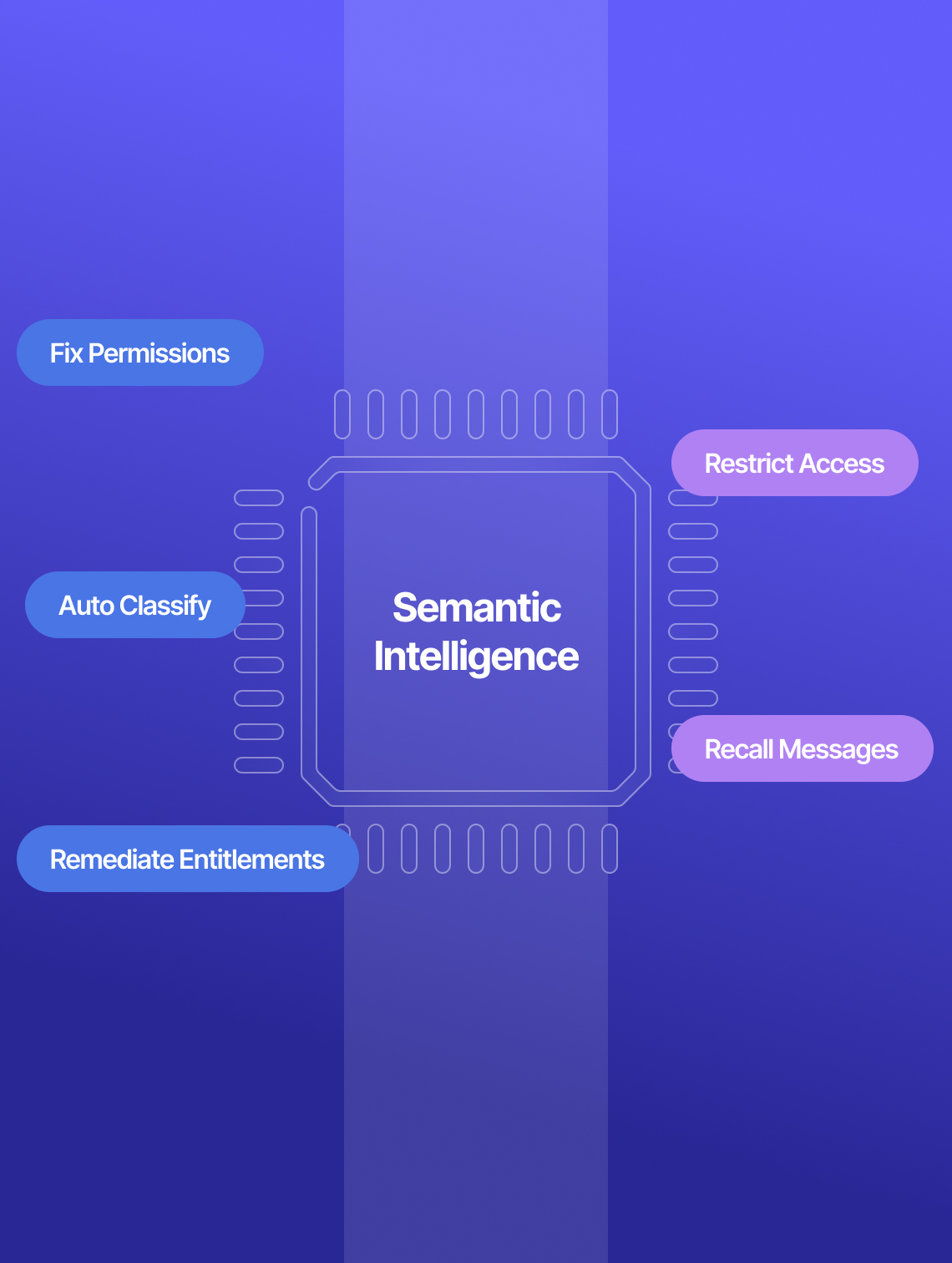
Concentric AI uses patented language models to understand the meaning and context of data stored in SAP HANA—not just identify keywords or patterns. It can continuously discover and classify sensitive data, analyze who has access to it, identify excessive or inappropriate permissions, and surface data exposure risks that traditional rule-based approaches may miss.
By combining AI-powered data understanding with SAP HANA's native security controls, organizations can move beyond simply securing the database to continuously understanding and protecting the sensitive data within it.
The compliance frameworks that apply to data stored in SAP HANA depend on your industry, location, and the types of sensitive information your organization collects and processes. Common requirements may include GDPR, HIPAA, PCI DSS, CCPA/CPRA, SOC 2, and NIST, as well as industry-specific regulations and regional data protection requirements.
SAP HANA provides security, access control, encryption, auditing, and other capabilities that can help organizations meet regulatory and compliance requirements. However, compliance requires more than securing the database. Organizations also need to understand what sensitive data is stored in SAP HANA, where it resides, who can access it, and whether it is appropriately protected.
Concentric AI complements SAP HANA security by continuously discovering and understanding sensitive data, analyzing access and exposure risks, and identifying potential compliance gaps. This helps security and compliance teams maintain appropriate controls, reduce unnecessary exposure, and demonstrate better visibility into sensitive data across SAP HANA and the broader enterprise.