Give users and AI agents prescriptive access to data with context that extends beyond roles and permissions.
Concentric AI delivers insights into data sensitivity, identity, and activity so you can make access decisions that reduce sensitive data exposure.
Knowing who can access data is only the beginning. Concentric AI connects data sensitivity, identity, and activity to show where access is appropriate, where it creates exposure, and what you can do about it.
Give people the access they need while keeping sensitive data from spreading further than it should. With continuous visibility and data-aware controls, security teams can strengthen governance without making access reviews a full-time job.
Find business-critical data, misplaced files, and oversharing risk, with clear insight into how to fix it.
Data access governance is the process of understanding and controlling who can access data, what they can do with it, and whether that access is appropriate. It helps organizations reduce excessive permissions, oversharing, and inappropriate access to sensitive data while supporting least-privilege principles.
Access permissions can accumulate over time, leaving sensitive data accessible to more people than necessary. Data access governance helps security teams identify excessive or inappropriate access, prioritize the highest-risk issues, and apply controls without disrupting legitimate business operations.
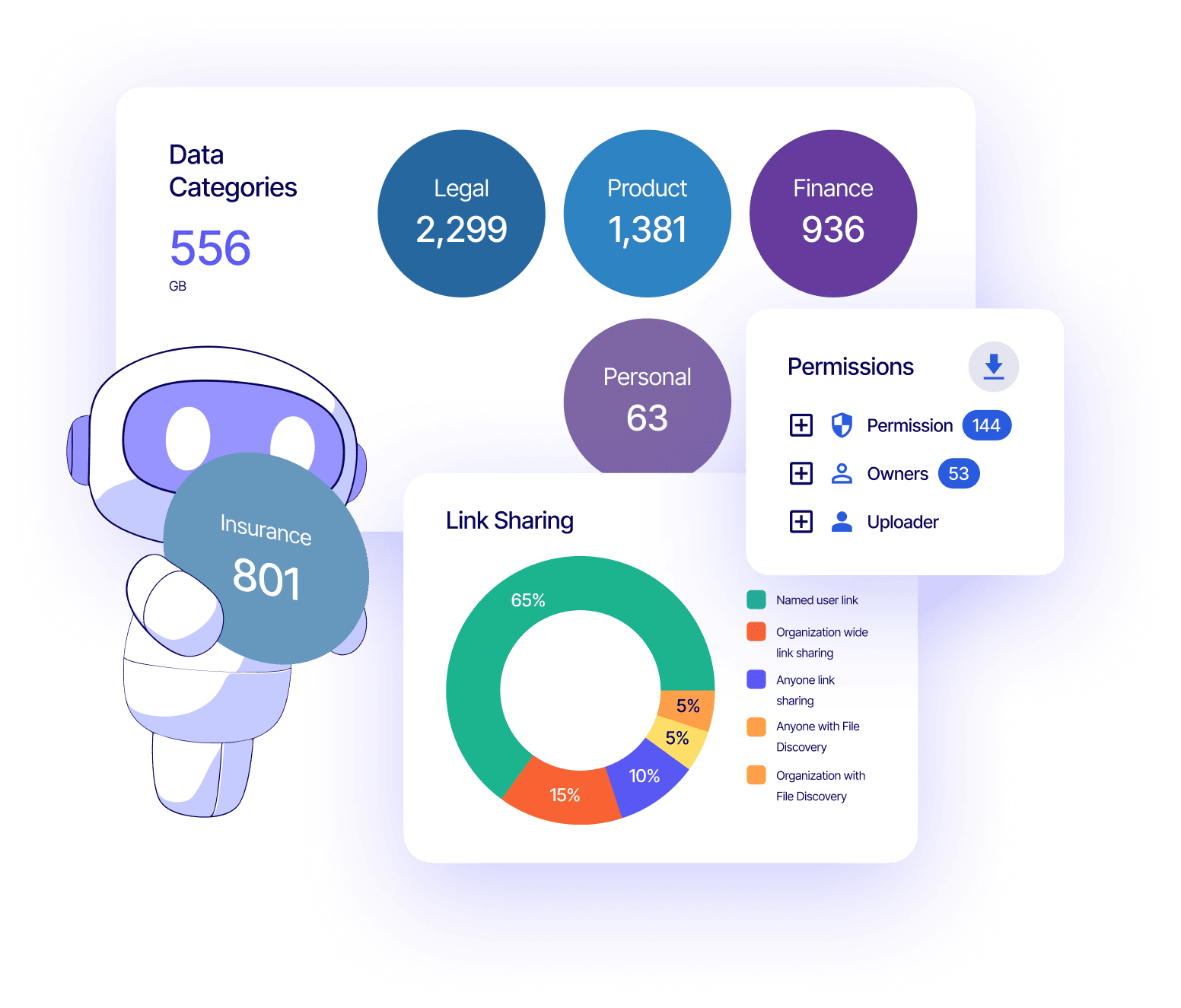
Concentric AI discovers and classifies sensitive data, analyzes who can access it, and continuously monitors how it is used. It identifies excessive permissions, organization-wide or external sharing, and risky access patterns, then enables teams to define policies and remediate issues directly in the platform.

Rather than relying on identity or role alone, Concentric AI evaluates the sensitivity and meaning of the data alongside who is accessing it, how it's being used, and other contextual signals. This helps security teams distinguish legitimate access from access that poses unnecessary risk.
Concentric AI identifies sensitive data accessible beyond the people who need it and surfaces excessive permissions and sharing. Security teams can then prioritize and remediate inappropriate access to move toward least privilege without relying solely on manual access reviews.
IAM primarily manages identities, authentication, authorization, and access to applications and resources. Data access governance adds visibility into the data itself—including its sensitivity, location, sharing, permissions, and usage—so organizations can determine whether access is appropriate in context.
DLP primarily focuses on controlling how sensitive data moves or is shared. Data access governance focuses on who can access data and whether that access is appropriate. Concentric AI brings data context and activity intelligence together to help organizations address both sides of the equation.
AI tools can surface information based on the permissions already assigned to users. If sensitive data is broadly accessible, AI can make it easier to discover and use. Concentric AI helps identify excessive access and oversharing, enabling organizations to establish appropriate data access controls before deploying or expanding AI.
Yes. Concentric AI monitors activity around sensitive data and can identify patterns such as privilege escalation followed by excessive downloads, unusual access, or risky sharing activity. These signals can help identify potential insider risk or compromised accounts.
Yes. Concentric AI complements existing IAM, DLP, Microsoft Purview, and other security investments by adding deeper context about the data being accessed and the risk associated with that access.
Yes. Concentric AI enables security teams to define policies and take remediation actions directly in the platform, helping reduce excessive permissions and inappropriate sharing without relying exclusively on manual review processes.
No. Data access governance complements IAM rather than replacing it. IAM determines and manages identity and access permissions, while Concentric AI provides visibility into the sensitivity, context, and actual usage of the data those permissions govern.