Insider Threat
Identify and reduce excessive permissions, risky sharing, and anomalous behavior.
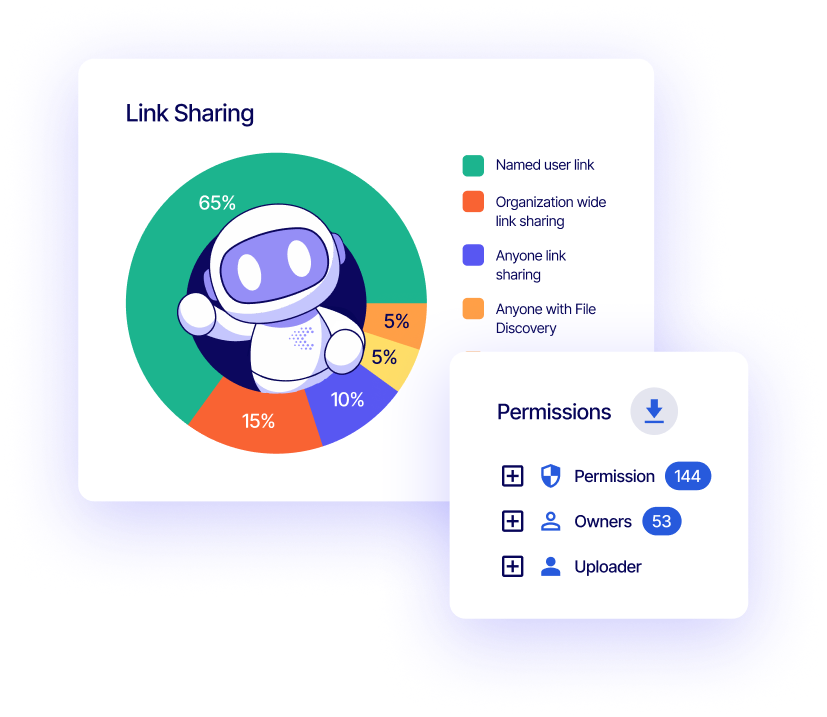
Your Data Has New Ways Out
The way people access, share, and use information has changed dramatically.
Everyone has access
Data moves fast
Risk doesn't always look risky
Not Every Insider Risk Is Intentional
The biggest data risks often stem from everyday actions, not from bad intentions.
Good people make risky moves
Employees may share, download, or upload sensitive information simply to get their jobs done.
Warning signs hide in the noise
A spike in downloads or unusual sharing activity means little if you don’t understand the data involved.
Context changes everything
Without knowing what data is at risk, security teams struggle to separate normal behavior from real threats.
You need insightful intelligence about both the behavior and the data behind it.


Connect the Dots Between Data and Behavior
Spot risky activity by understanding who is interacting with sensitive data and why it matters.
Understand user behavior
Identify anomalous activity such as excessive downloads, unusual sharing, suspicious deletions, and unexpected data movement.
Know what data is at risk
The Semantic Intelligence™ Engine reveals whether activity involves sensitive, regulated, or business-critical information.
Prioritize meaningful threats
Focus investigations on behaviors that create real exposure, rather than on every unusual event.
Reduce Risk Without Slowing the Business
Protect sensitive data while enabling employees, collaboration, and AI innovation.
Catch risky behavior earlier
Identify potential insider incidents before sensitive information moves beyond your control.
Reduce investigation time
Quickly understand who did what, when they did it, and with which data.
Protect sensitive information everywhere
Maintain visibility across file sharing, email, cloud applications, and AI workflows.
Enable confident collaboration
Give employees the freedom to work while keeping critical data protected.
Strengthen security operations
Add data context to behavioral analytics so teams can focus on the risks that matter most.

Frequently Asked Questions
What is an insider threat?
An insider threat is any risk to sensitive information posed by someone with legitimate access to organizational data. While malicious insiders do exist, many insider risks are unintentional—such as oversharing files, uploading sensitive data to personal applications, downloading large amounts of information, or using AI tools without understanding the associated exposure.
Does Concentric AI monitor employees?
No. The Concentric AI Semantic Intelligence™ platform is not designed to surveil employees or judge normal workplace activity. Instead, it helps security teams understand when user behavior poses a potential risk by analyzing activity in the context of the data involved. For example, a large download may be routine or may represent a serious exposure, depending on the data accessed and how it is being used.
How does Concentric AI identify insider risk?
Concentric AI combines user behavior data analytics with its platform to identify unusual activity involving sensitive information. It detects behaviors such as excessive downloads, unexpected sharing, uploads to personal applications, large-scale deletions, and other anomalous actions, then provides context about the data involved so teams can focus on meaningful risk.
How is the Concentric AI platform different from traditional user and entity behavior analytics (UEBA) solutions?
Traditional UEBA solutions often focus on identifying unusual behavior patterns. Our platform adds critical data context by understanding what information is involved, how sensitive it is, and the potential business impact. This helps security teams distinguish between activity that is unusual and activity that is truly risky.
Why is data context important for insider threat detection?
Not all data is equally sensitive, and not all unusual behavior is a threat. Context helps organizations determine whether an action involves customer information, intellectual property, regulated data, or other critical assets—enabling their teams to prioritize the risks that matter most.
Can Concentric AI help prevent accidental data exposure?
Yes. Concentric AI helps organizations identify risky data interactions before they become incidents. By understanding sensitive data, user behavior, access patterns, and sharing activity, security teams can proactively address exposures while still enabling employees to collaborate and innovate.
How does Concentric AI help organizations adopt AI securely?
AI introduces new ways for sensitive information to be accessed and shared. Concentric AI helps organizations understand when employees interact with AI tools, what data is involved, and where additional controls may be needed—enabling responsible AI adoption without unnecessarily limiting productivity.


